Colt Trooper III Range Report
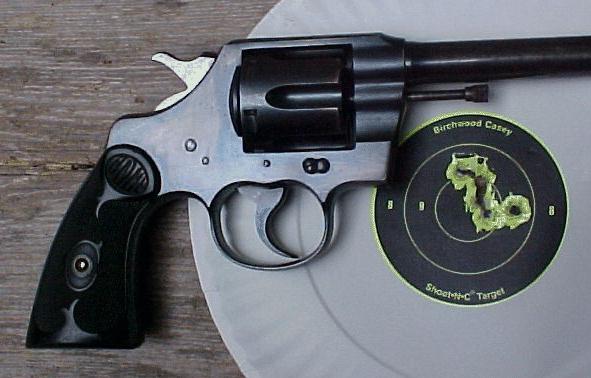
I have been looking for a quality full size double action .22 caliber revolver for some time. My mind has been set on a K-22, but at a recent gun show, I found a Colt Trooper III in .22 Long Rifle. For $365, I could not resist it. 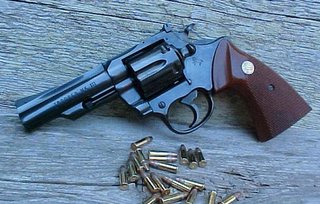 The Colt Trooper III is a finely polished, well fitted piece of ordnance. There is nothing second rate about it. The Trooper III also came in .22 magnum and .357 magnum. My particular gun is a blued example with a four inch barrel. It sports an Eliason adjustable rear sight, and a pinned ramp on the front of a matte black sight rib. This revolver is heavy. It is every bit a .357 magnum gun chambered for .22 LR. Nothing has been done to lighten it up. Everything has been done to retain the Colt level of quality. The blue finish is luscious. The cylinder closes with a thunk and locks up like a pit bull with tetanus.
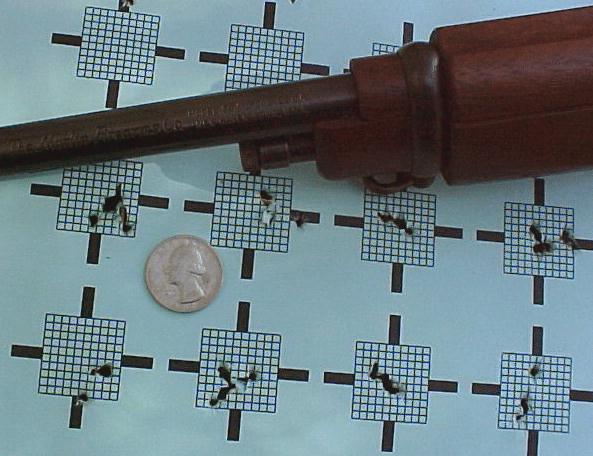
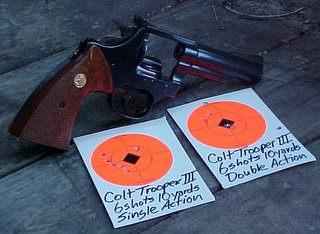 I took the revolver to the range with a 550 count box of Federal ammo. Cheap Wal-Mart stuff, but not as cheap as Remington Golden whatever in the green bulk pack. I shot the revolver until twilight started to fall, and suddenly realized I had to take a photo with targets. The Trooper III is a pleasure to shoot in .22 LR. Recoil is negligible. The trigger pull was excellent, a little heavy for my taste, but consistent throughout the stroke. There was no perceptible stacking. The revolver was accurate. I could not do this gun justice. Perhaps with some trigger time I can live up to it's potential.
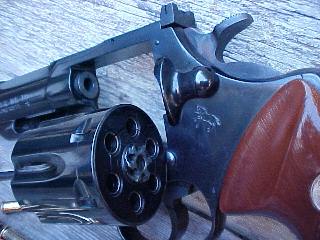 After approximately 19-20 cylinders full of ammo, I began to experience a sticky trigger, and finally a malfunction. The gun locked up. I diagnosed the problem as a tight cylinder gap, and theorized the dirty .22 ammo soot build up was causing the problem. Wiping the front of the cylinder off with an oily patch confirmed this, as the gun was instantly back to normal for another 100-150 rounds. I later measured the cylinder gap and found it to be .002 inches. I might have to open that up just a bit to resolve the issue for good.
This gun was a good buy. Being able to shoot a beautiful, heavy full sized revolver for a penny a shot is fantastic. Did the Trooper disolve my desire to find a K-22? No, like an appetizer, it only whetted the desire for more.
Trooper III Report on GunBlast
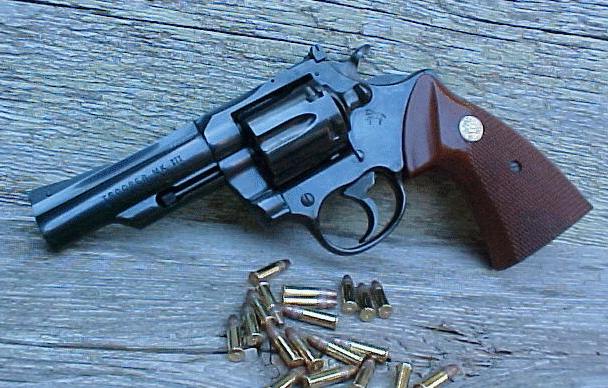 The Colt Trooper III is a finely polished, well fitted piece of ordnance. There is nothing second rate about it. The Trooper III also came in .22 magnum and .357 magnum. My particular gun is a blued example with a four inch barrel. It sports an Eliason adjustable rear sight, and a pinned ramp on the front of a matte black sight rib. This revolver is heavy. It is every bit a .357 magnum gun chambered for .22 LR. Nothing has been done to lighten it up. Everything has been done to retain the Colt level of quality. The blue finish is luscious. The cylinder closes with a thunk and locks up like a pit bull with tetanus.
  I took the revolver to the range with a 550 count box of Federal ammo. Cheap Wal-Mart stuff, but not as cheap as Remington Golden whatever in the green bulk pack. I shot the revolver until twilight started to fall, and suddenly realized I had to take a photo with targets. The Trooper III is a pleasure to shoot in .22 LR. Recoil is negligible. The trigger pull was excellent, a little heavy for my taste, but consistent throughout the stroke. There was no perceptible stacking. The revolver was accurate. I could not do this gun justice. Perhaps with some trigger time I can live up to it's potential.
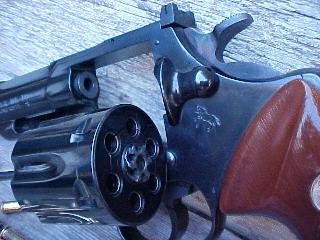 After approximately 19-20 cylinders full of ammo, I began to experience a sticky trigger, and finally a malfunction. The gun locked up. I diagnosed the problem as a tight cylinder gap, and theorized the dirty .22 ammo soot build up was causing the problem. Wiping the front of the cylinder off with an oily patch confirmed this, as the gun was instantly back to normal for another 100-150 rounds. I later measured the cylinder gap and found it to be .002 inches. I might have to open that up just a bit to resolve the issue for good.
 This gun was a good buy. Being able to shoot a beautiful, heavy full sized revolver for a penny a shot is fantastic. Did the Trooper disolve my desire to find a K-22? No, like an appetizer, it only whetted the desire for more.
Trooper III Report on GunBlast
posted by Xavier at 9:30 PM
0 comments